Problems or Neighbours?
Engaging Canada’s International Student Crisis
by Shiao Chong, Associate Director, Global Scholars Canada
International students in Canada are often framed statistically, economically and politically – as a population surge, a strain on resources and, increasingly, a problem to be managed and reduced. And these narratives about international students are often told without their voices being heard.

In past decades, Canada has been welcoming to international students. I, myself, was an international student in Canada back in 1989. Studying English Literature at the University of Alberta in Edmonton, I struggled with toxic stress and depression. But I had a Christian campus community that supported me and I was able to grow through my struggles. Eventually, I completed a Master’s in English Literature. If it weren’t for Canada’s welcoming stance for international students, I would not be a Canadian citizen today. In 2023, the number of international students in Canada reached over a million, a 29 percent increase from 2022. They made up 30 percent of Canada’s total enrolment in colleges and universities.
However, this surge in international students triggered a largely negative response from the Canadian public and significant policy shifts from the Canadian government. In 2023, Nanos Research found that 55 percent of Canadians wanted the federal government to accept fewer international students than the 900,000 projected for 2024. This reflects a broader anti-immigration trend among Canadians. A 2024 study by The Environics Institute for Survey Research found that while the public remains supportive of immigrants with specialized skills (73 percent), only 27 percent think international students should be a priority for government policy.
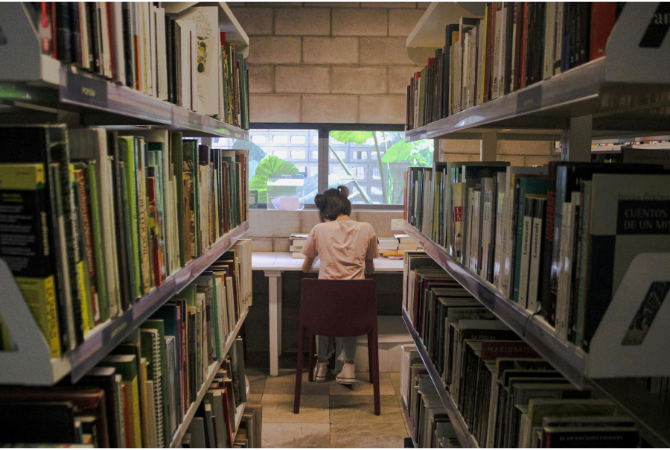
The Canadian government, in turn, implemented a series of policy changes beginning in late 2023 and accelerating throughout 2024. In January 2024, Immigration, Refugees and Citizenship Canada (IRCC) announced a cap on international student permit applications, resulting in a 35 percent decrease from 2023 levels. By September 2025, the number of study permit holders dropped to about 725,000. The IRCC aims to issue even fewer in 2026, to only 408,000 study permits.
Image-bearers, not numbers
Global Scholars Canada (GSC), as we support Canadian Christian professors as a redemptive influence in academia around the world, chose to engage the issue. “As an academic guild focused on global higher education,” says Peter Schuurman, Executive Director of GSC, “we are deeply attuned to the global flows of students, professors and research. Making connections in higher education across borders is the heart of our mission.” On November 14, 2025, GSC hosted a symposium that raised the question: Are international students a crisis, or do they present Canadians with an opportunity? The hybrid event was co-sponsored by the Canadian Scientific and Christian Affiliation, the Christian Reformed Campus Ministry at U of Toronto and Knox Presbyterian Church’s young adults ministry.
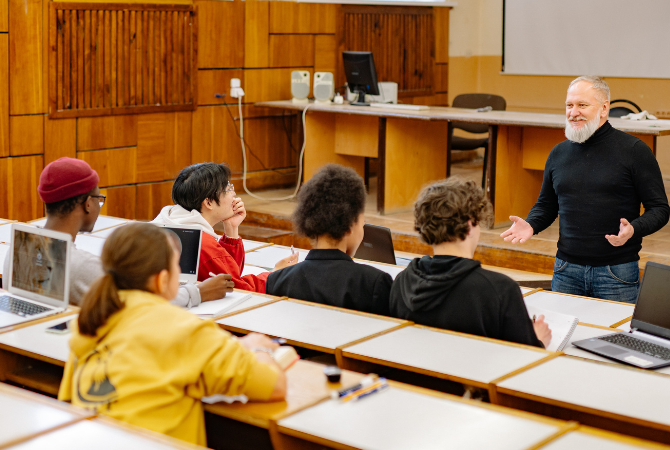
“International students should be viewed biblically as image-bearers of God, neighbours and sojourners, rather than mere statistics or economic units,” said panelist Dr. Gang Li, assistant professor of leadership at Trinity Western University and current chair of GSC’s board. Citing the biblical theme of seeking justice for the sojourner, Li asks Christians to counter the institutional trend of financially exploiting international students with compassion, advocacy and justice.
Hearing their voices
Following the symposium, GSC published the stories of 12 international students from various countries and faith backgrounds. Through a grant from a Christian foundation, GSC hired student journalists to interview and write the stories.
“We hope to make some close connections with international students and have them teach us about their experience in Canada,” Schuurman says of the project. “We also hope to see their stories touch the lives of church people and all Canadians who care about the sojourner within their town.”

Some recurring themes from the international students’ stories are negative, like isolation and loneliness, financial burdens, cultural adjustments and facing discrimination. But there are also many positive experiences, like spiritual and character growth, resilience, and eventually feeling at home. One of the international students, under the pseudonym Maria Hernandez, wrote, “I believe in the Canada that still wants reconciliation with its First Nations after acknowledging historical genocide, that fights to cut carbon emissions in order to care for our environment, that fulfills human rights for all people . . . That is the Canada to which I want to keep contributing my time and my expertise . . . I invite you, kind reader, to be that kind of Canada to others.” Her own experience as a student has inspired her to seek solidarity with others who feel subject to injustice.

Another student who grew up in Shanghai, China and came to Canada to study psychology wrote: “For me, studying abroad has meant a process of learning how to bear responsibility amid uncertainty, learning how to entrust what I cannot control to God, and gradually moving toward a more integrated and balanced way of life. More importantly, through this process, my parents’ faith has gradually become my own faith.”
Crisis of vision and values
To cap its engagement on this issue, GSC co-hosted a webinar with the Canadian Scientific and Christian Affiliation. The panel consisted of Ruth Hayhoe, professor in the Ontario Institute for Studies in Education (OISE) at the University of Toronto and GSC board member; Tin Yuet (Tiffany) Tam, an international MA student at OISE; Alan Lensink, InterVarsity Christian Fellowship’s National Director of Graduate Student Ministries serving at the University of British Columbia and Stephen Ney, a GSC scholar teaching writing and English Literature in Edmonton and online to PhD students in Sierra Leone. The discussion revolved around ways to support international students, from welcoming them into wider communities to inviting them to holiday gatherings, to ensuring they get access to existing resources. The positive contributions of international students – bringing cultural enrichment and diverse perspectives – were highlighted.
As for next steps, Schuurman remarked, “We will see where the Spirit leads next. We hope to draw more publicity to this issue and to the mission of GSC and see what opportunities arise from these efforts.”
Dr. Gang Li believes that the “crisis” of international students in Canada is ultimately “a crisis of vision and values.”

“Will we see one million problems, or one million image-bearers of God? Will we see neighbours to love or burdens to reduce? Will we see sojourners to welcome or demographic flows to cap?” He hopes Christians will take up the call to be peacemakers seeking shalom for all, including international students.
Note: Christian Courier (May 2026) originally published a version of this article. Reprinted (and slightly edited) with permission.