International Student STORIES: Global Flows of Education, Labour & Dreams
STORY 3 (When My Parents’ Faith Became My Own by Joe) – Moving from home countries to host countries, settling down from coast to coast; here, we offer Stories from International Students in Canada. These are students’ voices and may echo your own experience. Even though they may not be known personally (names are protected for privacy), we invite you to hear: why they chose Canada to study, how they have worked to build new lives here, the ways in which they contribute and make a difference both at home and here, and significantly, how their lives cross paths with Jesus Christ.

Joe grew up in a Christian family in Shanghai. He came to Canada to pursue further education in both undergraduate and graduate studies. Majoring in psychology, Joe shares how his faith journey has grown with his family and on his own after moving to Canada. Seeing how God has led him to build confidence and support others in Joe’s story.
STORY 3 – When My Parents’ Faith Became My Own by Joe
Leaving home without leaving family
I come from an ordinary Christian family in Shanghai. Growing up, my parents consistently hoped that I could engage meaningfully with a more open and pluralistic world. With that hope, they aspired that I would develop an independent sense of self, clear ideals, and the capacity to put them into practice within a broader social and cultural space. So my decision to come to Canada was driven primarily by a desire to explore new possibilities in life. This choice was less about leaving behind a familiar environment but more about moving toward the future, testing whether what I believe could still stand firm across different systems, languages, and ways of life.
For me, leaving home did not mean distancing myself from my family. On the contrary, studying abroad was a decision made within a context of stable relationships and mutual trust. My family and I shared the belief that genuine closeness does not depend on physical proximity, but on each person becoming independent, free, and being capable of taking more responsibilities. Leaving home was therefore not an attempt to escape family ties, but a way for each of us to continue forward with greater integrity. In this shared understanding, I left home without leaving my family.
How my parents have shaped my faith through important moments
My early formation in faith came primarily from my parents. For a long time, my understanding of faith was almost entirely embedded in family life. My parents’ prayers, judgments, and choices shaped the basic framework of how I understood the world. I never questioned faith itself, but I rarely recognized that in many crucial moments, it was my parents who carried the uncertainty and weight of faith on my behalf. After coming to Canada, my parents’ support for my faith gradually faded. Faith no longer continued naturally through the rhythms of family life; it required me to face it and respond to it on my own. Through this shift, I slowly came to realize that the God I had known since childhood was no longer simply the one my parents walked with, but the God whom I myself needed to build a relationship with and for whom I needed to be responsible .
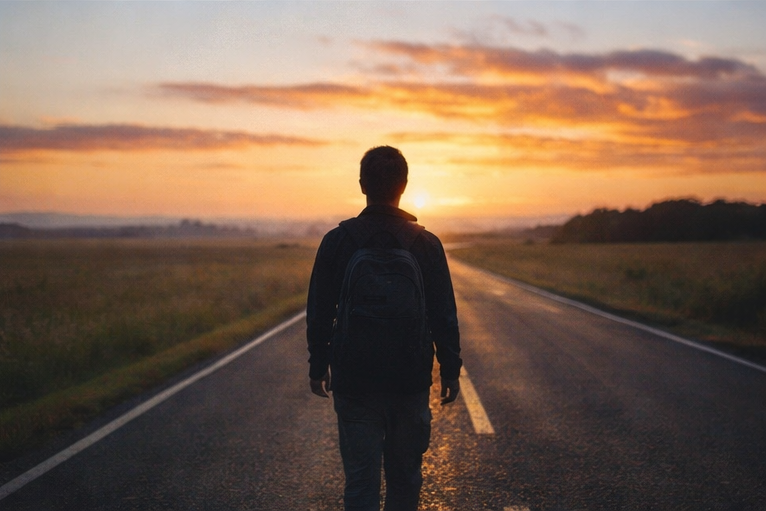
This transformation did not unfold through dramatic events, but emerged in concrete yet quiet moments. On October 7, 2023, Hamas launched an attack in Gaza. At the time, my parents were in Israel for work-related matters. Their planned return was cancelled, and they were stranded in Tel Aviv. From Canada, I could only follow the situation through fragmented information and was unable to offer any meaningful assistance. During that period, I experienced a particular clarity which was something that had previously existed only at the level of words: my parents often said that what they could do the most for me was to pray for me. I had understood this statement before, but had never truly entered into the emotional weight and responsibility it carried.
When risk became a reality for them, I found myself participating in a similar way. I could not control the situation, nor could I pretend that I was unaffected by concerning myself with their safety. Instead, while being aware of my own limitations, I entrusted what lay beyond my control to God. Through this process, I came to understand from their position what intercessory prayer entails as a form of responsibility, and more clearly learned how to rely on God while standing within risk rather than outside it.
Through the accumulation of such experiences, I came to see that faith is not an abstract certainty, but an inner order capable of sustaining the structure of everyday life. Throughout my years of study in Canada, I have been aware that I am not alone. Although my family is not wealthy, the consistent support they have provided has allowed my life abroad to remain largely stable and secure. Risks and temptations were certainly present, but those did not define the trajectory of my life. Instead, guided by faith and through continual personal adjustment, I gradually developed a way of living that is more balanced, integrated, and self-aware.
Surrendering my vulnerability and finding a clearer position in my life
This sense of balance has also been tested in real circumstances. In one seemingly ordinary yet memorable experience, I encountered this dynamic of responsibility and entrustment more concretely. Late one night, a classmate sent me a chain of unusual messages that suggested a potential mental health crisis. I felt an immediate sense of tension and concern for this classmate, and I knew I could not ignore it. I chose to keep communicating with them while turning inward to God in prayers, seeking clarity and calmness within my limited capacity. In the end, the situation was resolved appropriately. This experience made it clearer to me that while helping others, I must also learn to surrender my own vulnerability to God.
During my undergraduate years, I did not feel a strong sense of belonging in where I was. As a psychology student, I did not find a particular and distinctive place for myself in that environment. It was only in graduate school when my understanding of my own position and abilities became clearer, that I began to make more stable connections both academically and socially. This sense of belonging did not come from broad recognition, but from an acknowledgment of my own uniqueness. Once I stopped feeling the need to prove myself, it became easier to find where I belonged.
As my personal position became clearer, I also had to confront more external and structural challenges. In recent years, tightening policies in Canada around work permits and immigration pathways have brought greater uncertainty to international students’ future planning here. For me, these changes have been looming in the background persistently rather than discrete events to be addressed individually. The more immediate challenges have come from adapting to language, culture, and the social order: the unfamiliarity with legal and institutional systems, the cognitive burden of linguistic nuance, and the unease that can arise in unfamiliar public settings or the unexpected situations. All of which require time for international students to understand and to navigate while studying in Canada.
Finding my faith and mentors while being a “sojourner”
Reflecting on this period of study abroad, I have come to realize that the condition of being a “sojourner” as an international student is not only in geographical context, but also in emotional and spiritual contexts. Public discussions around international students often focus on numbers, policies, and resource allocation, while paying less attention to the deeper ways that this form of cross-border mobility has reshaped an individual’s inner life. For me, studying abroad has meant a process of learning how to bear responsibility amid uncertainty, learning how to entrust what I cannot control to God, and gradually moving toward a more integrated and balanced way of life. More importantly, through this process, my parents’ faith has gradually become my own faith.
As a single man, I have been blessed with adequate finances and good health throughout these years. Some professors have been crucial to my academic flourishing, including a gracious supervisor and mentor I met at an independent project. Later, a senior scholar whom I deeply respect supported me, most notably through providing a letter of recommendation, and has been an encouraging role model for me. In hindsight, I have been fortunate to learn from and be supported by many other generous and dedicated professors along the way.
Looking ahead, I still hope to fulfill the goals that initially led me to study abroad: to establish myself in an environment that allows for freedom, exploration, and growth. And more importantly, I want to create possibilities for a life that is not yet fully formed—ultimately, to the glory of the God who has already led me with countless graces. This work may happen in Canada, but of utmost importance is that my work remains connected to education and student support, particularly in meaningful ways to serve international students.
Ready to learn & talk more about it?
Join GSC’s Webinar – ‘International Student STORIES’
Tuesday, March 24, 2026 @ 7 – 8 pm EDT – join us online!
We’re looking to discuss biographical patterns, the industry of international student education, and focus attention on ways to make these global exchanges better. JOIN IN AN IMPORTANT CONVERSATION.