An Arduous Journey: The Making of an Appropriate Tool for Biblical Literacy in Africa
GSC celebrates posthumous publication of Rudy Wiebe’s work
“Perhaps those who pity the grammarian do not know that he finds joy and is sustained
by the conviction that his work is necessary.”
- Grammar of the Greek New Testament, by A. T. Robertson [Broadman, 1934],
page x.
We give thanks to God and to a persistent scholar whose faithfulness in the task of
book-making has opened up channels for the expansion of Christian ministry in
Africa – through the training of new ministry leaders.
Rudy Wiebe was our scholar working as a principal lecturer in the Christian Religious
Studies department of the Federal College of Education (FCE) Pankshin, Plateau State,
Nigeria (2004-2016). Here Rudy taught Greek and Hebrew language classes, as well as
classes on the Prophets, Paul, ethics and doctrine. He loved the Greek language and
he loved to teach it—especially teaching it to Bible translators in Nigeria (“icing on the
cake” he called those classes).
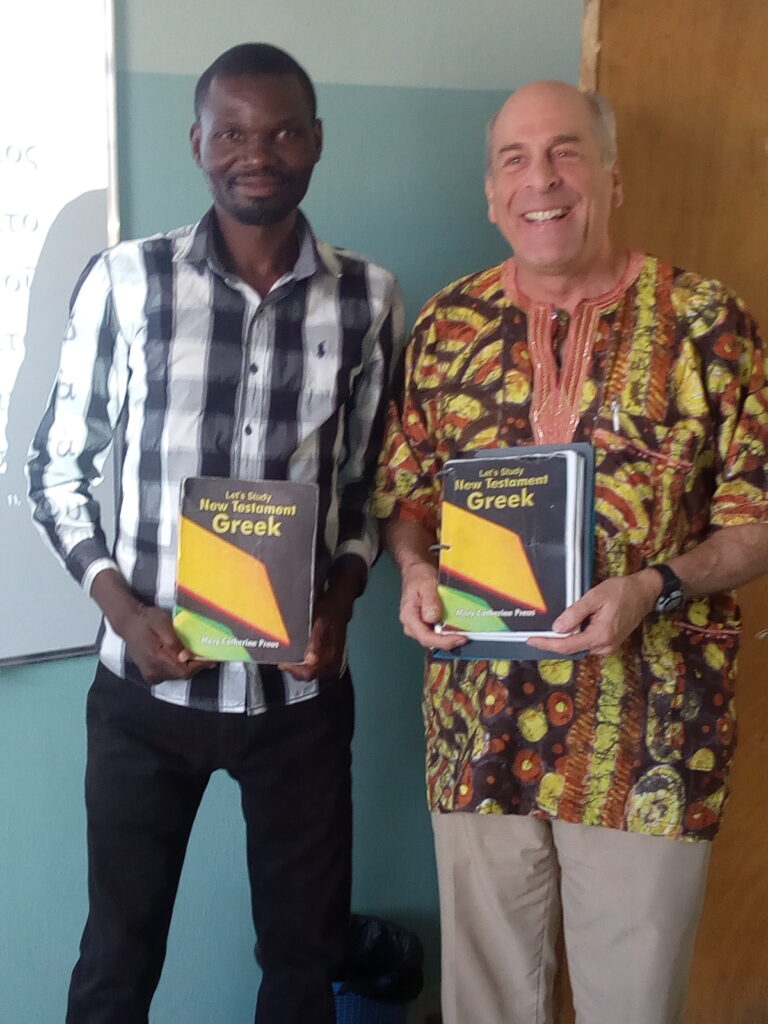
While there, he began to re-write the popular Greek grammar by Mary Catherine Preus
that was in use at the time (which was based on an earlier original book with the same
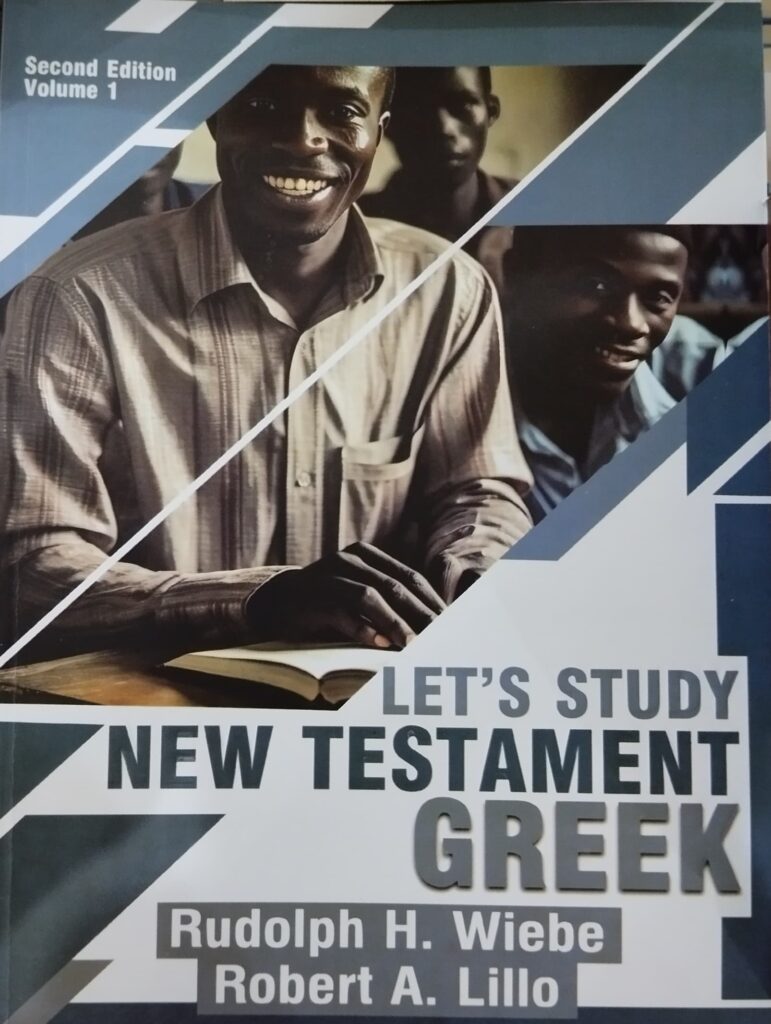
title). He and his faithful colleague Rob Lillo developed Let’s Study NT Greek (1st
edition) with 400 pages, field testing it on their students. It had some errors and so they
worked on a second edition, which they decided would sell better in 3 volumes, as some
students only go so far in the lessons. This will lower the price with three smaller
texts – Rob estimates up to 1/6th the cost of equivalent Western textbooks.
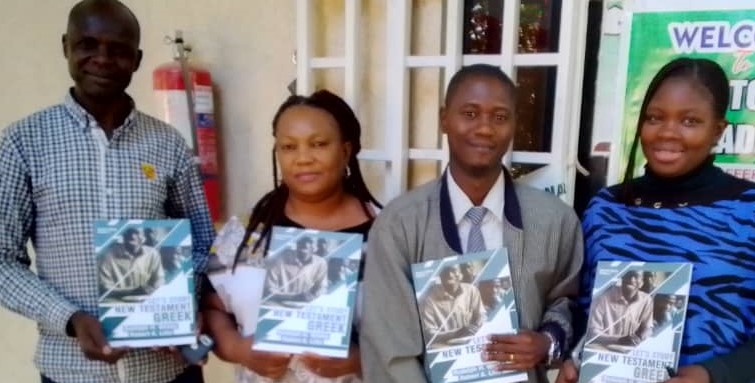
The first volume will be used by colleges and universities in Africa looking for a NT
Greek grammar. The second and third volumes will have shorter runs as they will be
mostly for seminaries – those interested in advanced Greek instruction. Since then the
cover and formatting have been completed by ACTS (African Christian Textbooks) staff
for this first volume. The first print run has already begun in Nigeria.
This is an important venture because textbooks from the West can be immensely
expensive and students may have to choose between food and books. Some will sell
their books after the class is done, but the greater purpose of teaching Africans is that
they will become African teachers and Bible translators, and their books are their tools.
The church in Africa depends on such training and long-term commitment, not just in
discipleship, but also in bible translation projects for different language groups.
Moreover, Rudy and Rob included some of the most recent research on the Greek
language and pedagogy, making it up-to-date and more effective. It should be mentioned that Rudy’s wife Marlene worked with Adrienne Lillo to develop literacy resources for primary grades (The Phonics Reading Adventure), and these materials were published through ACTS as well. This series is now being distributed by the newly formed NGO headed by Hosea Danjuma, a former student that became more
of a colleague, called The Centre for Literacy Development in Africa (based in Bukuru,
Plateau State, Nigeria).
Unfortunately, Rudy did not live to see the day of this printing. He expended some of his
final breaths to push the completion of the book forward. He died of a chronic illness in
November 2020, at which time a memorial fund was opened for the purposes of
supplementing the printing of the grammar. Rob Lillo then re-formatted and corrected
the second edition, which he completed in early 2023 (around 150 pages). The money
from Rudy’s memorial fund was then used to supplement the costs of the printing.
GSC gives thanks to God for the help of so many people, not least among who is co-
author Rob Lillo and the patient support of Marlene Wiebe. Thanks also are due to Luka
Vandi Uti (ACTS Managing Director), Bulus Makut (ACTS Accountant) and Paul Todd
(ACTS Senior Publishing Editor), who designed much of the cover.
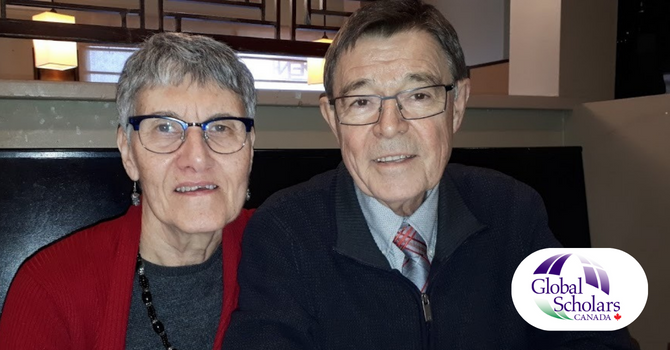
Marlene, who came to call herself “the Greek Widow,” summarizes this work: “Rudy and
Rob produced this manual out of their love for the truth and power of God’s Word and
their desire that what teachers learn themselves and impute into their students will
result in the same fruitful love!”
The bigger picture for which we give thanks is this: supporting the development of the
infrastructure and personnel for faith-filled higher education in Africa, which in turn will
lead to flourishing for the land and its people. We want to help raise up local leadership
that will be equipped for service in the African church and its surrounding culture. We
hope that hundreds upon hundreds of students will find a more intimate relationship with
Scripture because of their knowledge of the original language and their skill in
interpreting it for Africans today.
Rob Lillo insists that this effort is part of an obligation to our global Christian neighbours
to keep the Biblical story fresh and relevant: “Our fellow brothers and sisters in Christ
should have as good a Bible translation in their own languages as we have in the West.
The Bible, in all its revelation about the glory of God, the history of God’s work on earth,
and the glory of the saving Gospel of Christ, all of it should be as clear, beautiful, and as
compelling for every human being who hears its eternal message.”