International Student STORIES: Global Flows of Education, Labour & Dreams
STORY 5 (Finding Home Away from Home: My Journey as an International Student in Canada by Fiifi Ponku) Moving from home countries to host countries, settling down from coast to coast; here, we offer Stories from International Students in Canada. These are students’ voices and may echo your own experience. Even though they may not be known personally (names are protected for privacy), we invite you to hear: why they chose Canada to study, how they have worked to build new lives here, the ways in which they contribute and make a difference both at home and here, and significantly, how their lives cross paths with Jesus Christ.
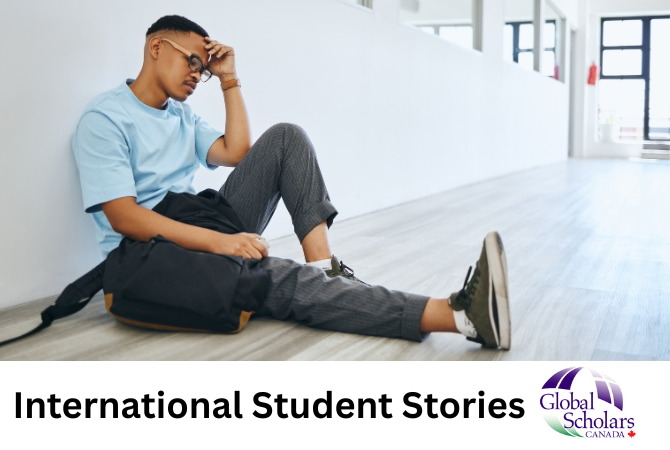
Fiifi Ponku is a Master’s student in Economics at the University of Waterloo and is from Ghana. In his story, Fiifi Ponku shares the financial and emotional burden he has faced after moving to Canada for his studies. But the solitary journey in Canada has transformed Fiifi Ponku and helped him understand peacemaking in Christ better. Read Fiifi story of finding home while being away from home
STORY 5 – Finding Home Away from Home: My Journey as an International Student in Canada by Fiifi Ponku
An unanticipated overseas study that tests my identity and faith
Coming to Canada as an international student was one of the boldest decisions in my life. As a first-generation student from Ghana, and the first in my extended family to pursue graduate studies abroad, this journey carried not only my personal aspirations but also the collective hopes of those who believe education is a pathway to a better future. I envisioned world-class learning, broader opportunities, and a chance to grow into the person God has called me to be. What I did not fully anticipate was how profoundly this journey would test my endurance, identity, and faith.
The decision to study in Canada came at a significant personal cost. I invested nearly six years of my savings to make the move. Like many international students, I arrived with optimism, believing that hard work, discipline, and faith would be enough to manage tuition, rent, food, and other living expenses. The reality, however, was sobering. Within a short time, I was forced to take a USD $13,000 loan simply to survive the rising costs of accommodation, groceries, and transportation. I watched friends accumulate debts exceeding USD $50,000, huge financial burdens that could take decades to repay. Back home, families often assume that arriving in Canada means instant financial stability. “You’ve made it,” they say. Yet behind that perception lies a silent struggle marked by stress, sacrifice, and a constant fear of failure. A major driver of the international student crisis in Canada is the sharp disparity between domestic and international tuition fees. Average undergraduate tuition for domestic students has increased modestly in recent years due to public subsidies and regulatory controls. In contrast, international tuition has risen far more steeply. Today, international students often pay five to six times more than domestic students for the same education. These students are often left without access to government grants, subsidized loans, or tuition protections. Universities increasingly rely on this revenue from international students’ tuition to offset funding shortfalls, but the burden is transferred directly to international students and their families. Many finance their education through long-term savings or high-interest private loans, compounding financial stress amid rising housing and living costs.
Transitioning from communal life to solitary life abroad
Financial pressure, however, is only one part of the story. The social transition proved equally challenging. Ghana is deeply communal; relationships are warm, spontaneous, and interconnected. You can walk into a neighbor’s home unannounced and feel immediately welcomed. Canada, by contrast, is structured around privacy and individualism. I lived in my apartment building for months without knowing my neighbors. During my first Christmas, I stayed indoors alone while celebrations echoed outside. That loneliness was not merely physical, it was emotional. The abrupt shift from community to isolation weighs heavily on many international students, particularly those navigating a new culture without family or long-standing support systems.
Yet, it was in this solitude that I encountered something deeply transformative. I found God’s presence in the quiet moments; when hope felt distant and answers seemed unclear. My faith became my anchor. It reminded me that my worth was not defined by tuition fees, visa status, or academic performance. I often found myself asking a deeper question: What about international students who do not know Christ? Every international student bears the image of God. Beyond policy debates and statistics are human beings—young people with dreams, fears, and immense potential. To overlook this reality is to miss the heart of the crisis.
How peacemaking in Christ may bring changes to international students who feel unseen
This journey has reshaped my understanding of peacemaking. Peacemaking is not passive; it is intentional. It is about restoring dignity, creating belonging, and addressing injustice with compassion and truth. International students are not merely economic contributors or enrollment numbers. They are neighbors, classmates, and future leaders who deserve care, understanding, and meaningful structural support.
There is a shared responsibility in addressing this reality. Churches can play a vital role by intentionally welcoming international students, offering mentorship, building friendship, and creating a sense of family. Sometimes, a shared meal or a simple invitation can change a life. Educational institutions must go beyond recruitment and branding. Robust support services, affordable housing partnerships, and genuine inclusion are not optional, they are essential. Policymakers must confront the root causes of the crisis like skyrocketing tuition, housing shortages, and inconsistent labor policies, rather than relying solely on enrollment caps. And to fellow international students, I say this: hold on. Your journey has purpose, even when it feels overwhelming. You are not invisible.
As I reflect on this journey, one verse from the Bible continues to guide me: “Blessed are the peacemakers, for they shall be called children of God” (Matthew 5:9). Peacemaking begins when we choose to see one another fully, not as burdens or benefits, but as people. My hope is that by sharing this story, we move one step closer to a Canada where international students do not merely survive but truly find a home away from home.