Partnering in Christ’s Mission Through Education
By Jasmine Eisener, GSC Student Intern
Luke 4:18-19: “The Spirit of the Lord is on me, because he has anointed me to proclaim good news to the poor. He has sent me to proclaim freedom for the prisoners and recovery of sight for the blind, to set the oppressed free, to proclaim the year of the Lord’s favour.”
In the passage above, Jesus expresses the Father’s heart for the poor, the oppressed, the blind, and the imprisoned. Throughout his ministry, Jesus demonstrated God’s desire for his children to experience his goodness, and freedom. Partnering with God in these desires can happen through teaching, encouragement and even through investing in someone’s education. Global Scholars Canada (GSC) professor Dr. Wendy Helleman’s personal and educational investment in Nigerian scholar Dr. Rebecca Dali demonstrates how supporting one person through a PhD can ultimately impact thousands of vulnerable people.
Childhood Poverty
Rebecca was born and raised in Borno State in northeastern Nigeria. Growing up, she experienced intense poverty. Her family could not afford books, pens, or school supplies. For school uniforms, she collected old, tattered ones from classmates and sewed them together. When learning to read and write, the dirt on the ground became her notebook because there was no money for writing materials. These hardships extended into the classroom, where classmates mocked her worn clothing and lack of supplies.
Yet through the encouragement of her mother and the Girls Brigade, Rebecca was continually reminded of her value despite the degrading comments about her poverty. Psalm 139:14 became an anchor for her life: she was fearfully and wonderfully made, and neither poverty or human opinion could change that truth.
When Rebecca was seven years old, her mother told her that one day she would become a minister or preacher. Rebecca struggled to believe it. She often wondered, How could God call someone living in such poverty? Little did Rebecca know that God would move even in her poverty, not just to take care of her but also to care for the poor, the oppressed, and those who had been forgotten.
Beginning Ministry
After secondary school, Rebecca trained as a teacher. Teaching was deeply meaningful to her because she wanted to become the kind of educator she wished she had growing up: someone who treated every student with dignity regardless of their family’s income.
As Rebecca’s ministry grew, she and her husband felt called to serve together. Between 1983 and 1996, they studied at the Theological College of Northern Nigeria. Yet new challenges emerged. This time, the barriers were not poverty but attitudes toward women in ministry. Rebecca believed God had called her to preach, but the Church refused to ordain women.
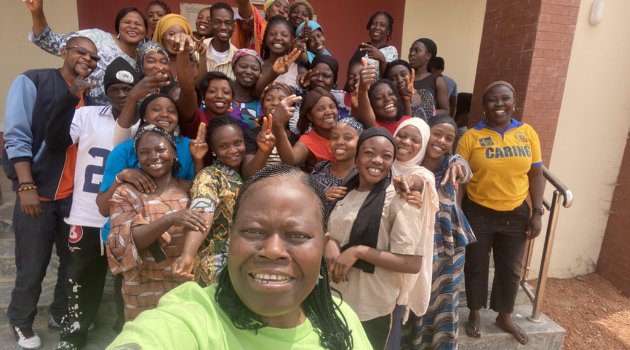
Despite these obstacles, Rebecca continued serving her community. She and her husband opened their home to people in need, providing food, clothing, encouragement, and practical support. She especially cared for children who walked barefoot to school, like she once had. These small acts of service became the foundation of what would later become the Centre for Caring, Empowerment and Peace Initiatives (CCEPI), founded on April 4, 1989 but was officially registered as a non-profit organization in 2011. CCEPI aims to document violence (over 200,000 deaths documented) and assist victims (over 2 million aided) of terrorism and conflict in Nigeria.
Academic Journey
Rebecca’s academic journey continued when she enrolled in a second master’s degree in Ethics and Philosophy at the University of Jos. Around this time, two highly respected Global Scholars Canada scholars, Dr. Wendy Helleman and Dr. Adrian Helleman, joined the university.
Rebecca was captivated by their teaching. In particular, Wendy’s work resonated with Rebecca’s growing desire to understand the ethical and philosophical questions surrounding women’s suffering. This issue was deeply personal. Rebecca’s own mother had lived with leprosy and experienced the painful isolation of being separated from her community.
After graduating from her master’s degree in Ethics and Philosophy in 2005, Rebecca remained committed to giving voice to women whose experiences of suffering often went unheard. She began pursuing a PhD at the University of Jos, writing much of her research independently while continuing her ministry and community work.
Rebecca asked Wendy to supervise her research. Although Wendy and Adrian’s time in Nigeria was ending, Wendy agreed to continue mentoring her remotely. However, after the Hellemans left, the university reassigned Rebecca’s supervisor against both Rebecca’s and Wendy’s wishes. The new supervisor verbally told Rebecca that he will dismiss much of her work. Years of her work suddenly seemed at risk.
Rebecca contacted Wendy, who immediately recognized the seriousness of the situation. Determined to support Rebecca, Wendy returned to Nigeria and advocated directly with university leadership. Eventually, Wendy was reinstated as Rebecca’s supervisor.
With Wendy’s support and mentorship, Rebecca completed her PhD in just three years. Beyond helping her finish a degree, Wendy helped refine Rebecca’s research to focus on practical ways to support women affected by violence, conflict, and displacement. Through her research, Rebecca was able to give voice to women whose stories might otherwise never have been heard.
When it came time for her thesis defence, Wendy returned to Nigeria once again to support her. For Rebecca, that presence meant more than academic supervision. As she reflected later: “Women are like second class in Nigeria, so you never really know who will be there to support you.” She also said: “If it wasn’t for Global Scholars Canada sending (Wendy) there and if not because of her kindness and the way she helped me, I would not get the PhD at all.” The impact of that mentorship extended far beyond a university degree.
Humanitarian Work
Following her graduation, Rebecca continued expanding CCEPI’s work among Nigerian widows, orphans, displaced families, and survivors of violence of all faiths, Christians and Muslims included. The organization’s efforts eventually attracted the attention of many individual generous donors, Churches, and organizations including the United Nations High Commissioner for Refugees (UNHCR), NELA/USAID, Department of States United States of America through American Embassy Nigeria, Tearfund England, CARPO Ministries, Church of the Brethren, International Rescue Committee, Bill & Melinda Gates, European Union, Swedish, Danish and Dutch Refugees Council, Christian Aid Ministries, Bread for the World, Germany, Nigerian Victim Support Fund (VSF), National Emergency Management Agency (NEMA), World Women’s Day of Prayers (WWDP) German, Austria and Switzerland which partnered with CCEPI because of the impact it was having in communities across Nigeria.
Together, their work included supporting families affected by conflict, caring for widows and orphans, providing trauma healing programs, offering vocational and computer training, distributing food and essential supplies, and building clinics. Through these initiatives, survivors of violence and abuse were given opportunities to heal, rebuild their lives, and regain hope.
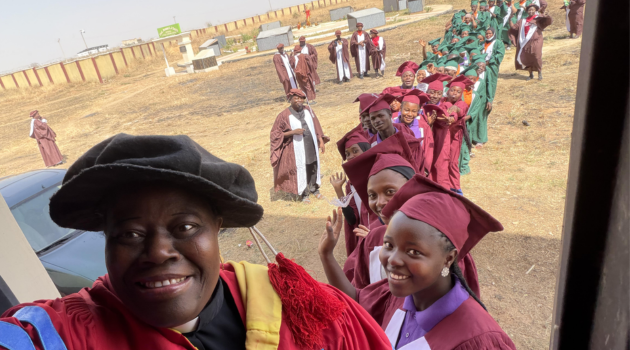
As Rebecca described the work: “We have more than 200,000 names engraved in a memory Garden of people who have been killed by terrorists and (whom) still have families and children left.”
One of CCEPI’s most notable work was aiding the women of Chibok in the aftermath of the Boko Haram insurgency. In 2014, Boko Haram kidnapped 276 schoolgirls, and to this day, 100 of them are still missing. CCEPI supported the women and children who had escaped their captivity. CCEPI helped with the difficult transition home for these women in a culture that systemically discriminates against women and especially against raped children and children of rape.
In fact, at one point, Rebecca herself was kidnapped by Boko Haram. But because her captors knew of her work that did not discriminate between Muslims and Christians, they let her go.
In 2017, Rebecca’s humanitarian work was recognized by the United Nations with the Sergio Vieira de Mello Humanitarian Award. Her other awards include Global Tassel’s 2021 Founder’s Leaders Key Award for her dedication, leadership, and service to Global education.
Although she did not seek recognition, the attention brought unintended new dangers. Eventually, threats against Rebecca and her family forced them to flee Nigeria and seek safety in the United States.
Education as Tool for Christ’s Mission
Today, Rebecca serves as pastor at Panther Creek Church of the Brethren in Iowa while continuing to lead both CCEPI Nigeria and CCEPI America. She continues writing, speaking, and supporting the work in Nigeria whenever possible. Two of her more recent books are: We Bore the Brunt and We Have Walked in Each Other’s Shoes.
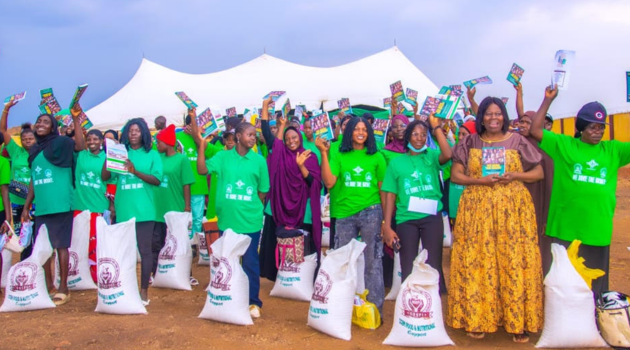
Rebecca’s story demonstrates how education can become a powerful tool for advancing Christ’s mission. A PhD did more than provide her with academic credentials. It gave credibility to her voice, strengthened her ability to advocate for the vulnerable, and expanded the reach of her work.
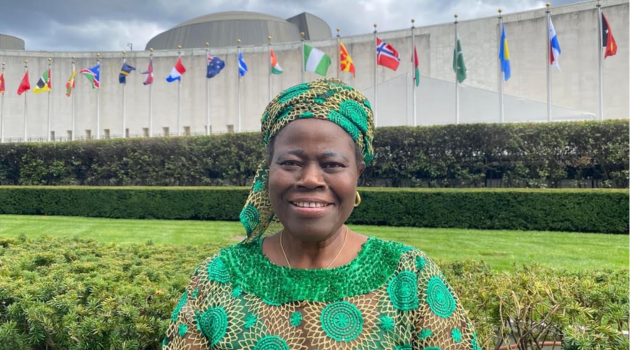
Looking back on her journey, Rebecca often reflects on how different her life would have been without Wendy’s mentorship and Global Scholars Canada’s support. Through one professor’s willingness to invest her time, encouragement, and expertise, thousands of vulnerable people have been served.
This is the ripple effect of education rooted in Christ’s love. What began as a professor mentoring a student eventually became trauma healing for survivors, support for widows and orphans, care for displaced families, and hope for communities affected by conflict.
In many ways, Rebecca’s story is a modern example of Luke 4:18-19 in action. Through education, encouragement, and faithful partnership, God continues proclaiming good news to the poor, freedom to the oppressed, and hope to those who need it most.
